

Clogged Sewer Line Repair in Dallas–Fort Worth
A clogged sewer line is one of the most disruptive plumbing problems a homeowner can face. When the main line becomes blocked, every drain in the home can slow, back up, or overflow—often without warning. Toilets may gurgle, showers may fill with dirty water, and strong sewer odors can enter the home. At DFW Plumber and DFWplumber.com, we specialize in fast, professional sewer line clearing, camera inspections, root removal, and long-term sewer line solutions for homes across Dallas–Fort Worth.
Sewer line issues should always be treated as urgent. Left untreated, a single blockage can create sewage backups, extensive damage, and costly repairs. This page explains the common causes of sewer clogs, warning signs, repair methods, and what to expect during a professional sewer line service.
Signs Your Sewer Line Is Clogged
A clogged sewer line behaves differently than a clogged sink or toilet. Because the sewer line serves as the main drainage path for the entire home, symptoms appear across multiple fixtures.
- Multiple drains backing up at the same time
- Gurgling toilets when sinks or tubs drain
- Sewage odors coming from drains, tubs or floor vents
- Slow draining throughout the home
- Water backing up into the bathtub or shower when flushing the toilet
- Overflowing exterior cleanout during heavy use
- Yard wet spots or sunken areas near the sewer line
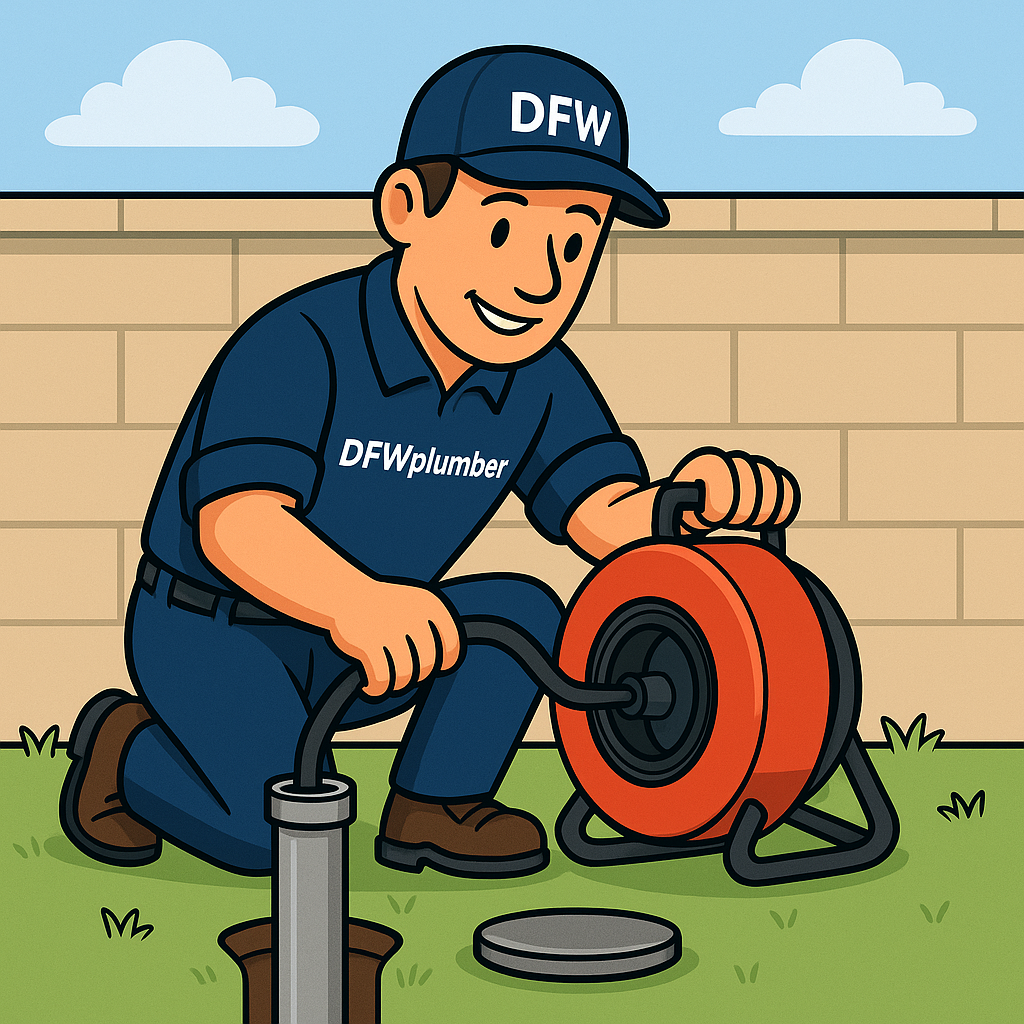
If more than one drain is affected, or if your toilet gurgles when other fixtures drain, the problem is almost always in the main sewer line.
Common Causes of Sewer Line Clogs
DFW homes vary widely in age and construction, and sewer line issues can develop for many reasons. The most common causes include:
- Tree roots growing into sewer pipes (a major issue in older neighborhoods)
- Collapsed or cracked sewer lines due to age or shifting soil
- Grease buildup solidifying inside the line
- Flushable wipes—which do NOT break down and cause severe blockages
- Foreign objects flushed down toilets
- Heavy scale and mineral deposits
- Sagging sewer lines (a “belly”) that trap debris
- Old cast iron lines corroded internally
Homes built before the 1980s often have cast iron or clay sewer lines that weaken over time. Newer PVC systems can also clog if misaligned, sunk, or improperly graded.
How DFW Plumber Clears Clogged Sewer Lines
Our licensed plumbers use a combination of industry-leading tools to clear blockages safely and effectively.
1. Sewer Camera Inspection
- Identifies the exact location of the clog
- Shows whether roots, grease, or a broken pipe is the cause
- Prevents guesswork and unnecessary digging
Camera inspections allow us to diagnose the problem quickly and recommend the right repair method.
2. Professional Sewer Snaking
- Short-term solution for blockages
- Breaks through debris, wipes, or small root growth
- Best for minor to moderate clogs
Snaking is often the first step, but deeper or recurrent blockages may require more advanced cleaning.
3. Hydro Jetting (High-Pressure Sewer Cleaning)
- Removes heavy grease buildup
- Scours pipe walls clean
- Clears roots and restores full flow
- Prevents future blockages better than snaking alone
Hydro jetting is the most thorough cleaning method and ideal for older lines, restaurants, or homes experiencing chronic backups.
4. Sewer Line Repair or Replacement
If the sewer line is broken, collapsed, or severely root-damaged, clearing it may not be enough. In these cases, DFW Plumber provides:
- Spot repairs for localized breaks
- Pipe replacement for failing sections
- Sewer reroutes to bypass problem areas
- Full line replacement for aging or collapsed systems
We locate the failing section and provide multiple repair options based on your home’s layout and budget.
Why Sewer Clogs Are More Common in DFW
DFW’s clay soil expands and contracts drastically during wet and dry cycles. This movement puts pressure on underground sewer lines, causing:
- Cracks and fractures
- Misalignment at pipe joints
- Sagging sections (“bellies”)
Clogged Sewer Lines
