


Slab Leak Detection in Dallas–Fort Worth
A slab leak is one of the most destructive plumbing issues a homeowner can face. Because the leak occurs beneath the concrete foundation, it often goes unnoticed until major symptoms appear—warm floors, moisture, cracks, or a sudden rise in your water bill. Early detection is critical. DFW Plumber provides advanced slab leak detection throughout Dallas–Fort Worth using industry-leading tools that identify leaks with accuracy, minimize invasive work and prevent long-term foundation damage.
This page explains the warning signs of slab leaks, the technology used to locate them, common causes, the risks of ignoring early symptoms, and what to expect from a professional inspection.
What Is a Slab Leak?
A slab leak occurs when a water line beneath your home’s concrete foundation cracks, bursts or develops pinhole corrosion. Water begins escaping into the soil beneath the home, creating pressure, undermining the foundation and saturating surrounding flooring and walls.
Because the leak is hidden, it requires specialized equipment—not guesswork—to locate accurately.
Warning Signs of a Slab Leak
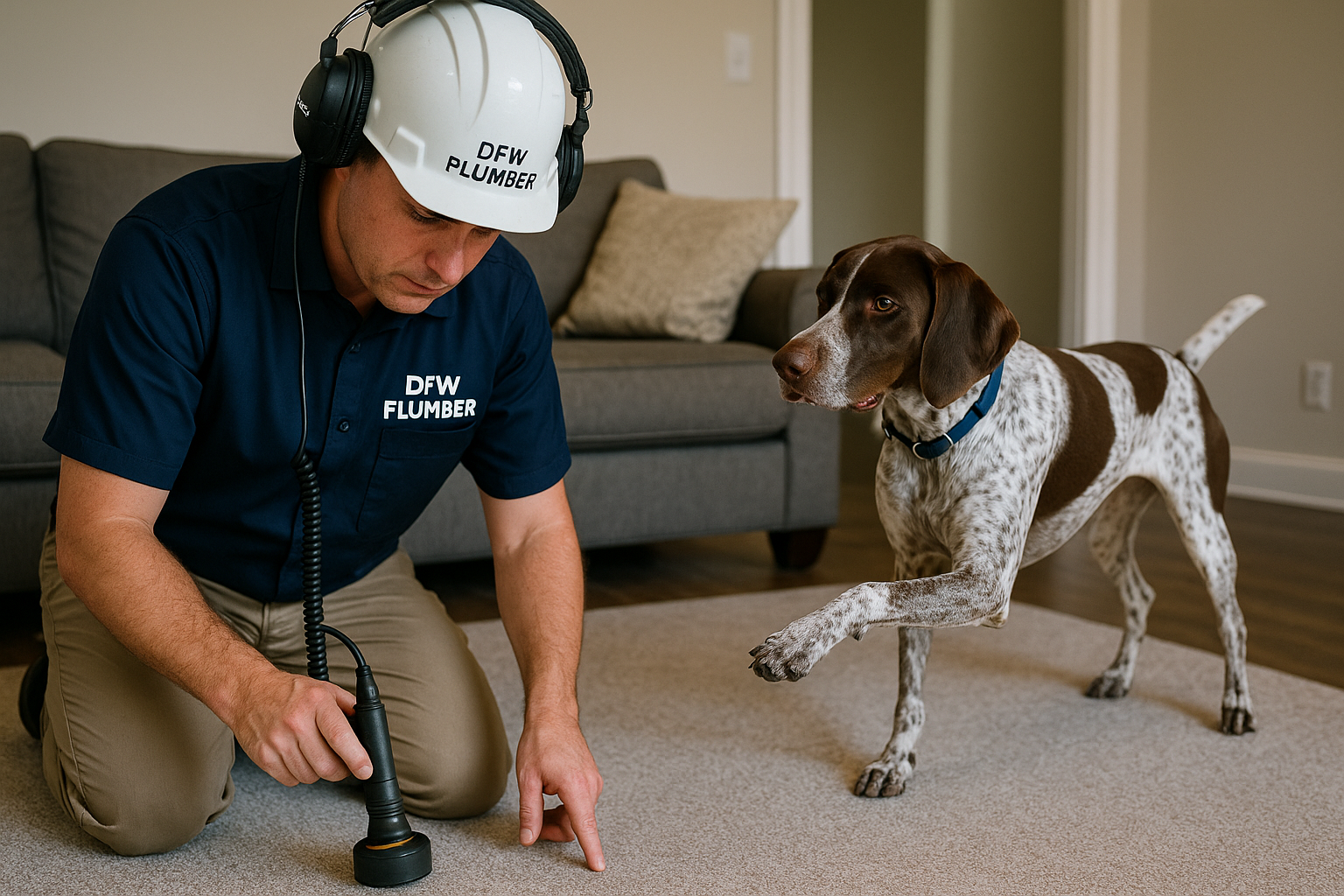
Call DFW Plumber immediately if you notice any of these symptoms:
- Warm or hot spots on tile, hardwood or concrete floors
- Hearing water running when no fixtures are in use
- Sudden spikes in your water bill without increased usage
- Moisture or damp areas around baseboards or flooring
- Low water pressure throughout the home
- Cracks in walls, floors or foundation caused by soil movement
- Mildew or musty odors inside the home
- Pooling water outside near foundation walls
The earlier a slab leak is detected, the less damage your home will sustain.
Why Slab Leaks Are Common in North Texas
The expansive clay soil across the Dallas–Fort Worth region expands during wet months and shrinks during dry seasons. This constant movement puts tremendous stress on buried plumbing lines, especially older copper systems installed through concrete or directly underneath slabs.
Common causes include:
- Soil expansion and contraction stressing pipes
- Corroded copper lines (common in older homes)
- Poor installation with sharp bends or weak joints
- Electrolysis from metal contact or soil chemistry
- Hot water line deterioration from constant pressure changes
- Rubbing or abrasion against concrete or rebar
Homes built before the mid-2000s are especially vulnerable to slab leaks due to installation practices and material aging.
How DFW Plumber Detects Slab Leaks
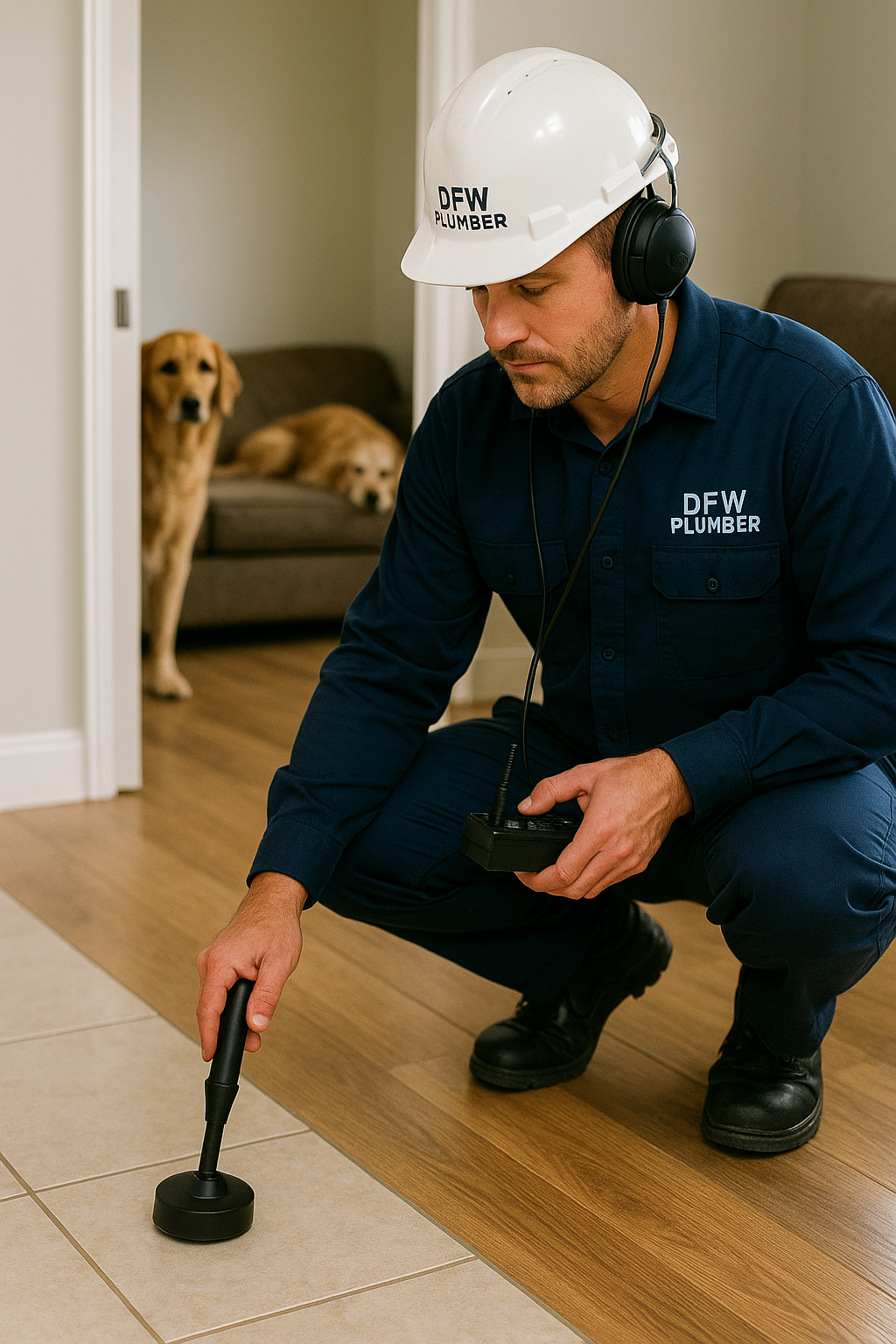
Precise detection prevents unnecessary demolition, minimizes repair costs and ensures accurate location of the damaged line. DFW Plumber uses a multi-step detection approach:
1. Electronic Leak Detection
- Highly sensitive acoustic sensors listen for underground leak activity
- Identifies pressurized water escaping through slab cracks
2. Thermal Imaging Cameras
- Highlights temperature changes beneath flooring
- Critical for locating hot-water slab leaks
3. Pressure & Isolation Testing
- Determines which water line is leaking
- Allows isolation of hot/cold loops and specific pipe branches
4. Moisture Mapping & Meter Readings
- Identifies moisture paths inside flooring, walls and baseboards
- Helps determine leak severity
5. Line Tracing Equipment
- Maps the exact route of buried water lines
- Ensures pinpoint access for repairs or reroute options
This method allows DFW Plumber to locate slab leaks with precision and avoid unnecessary cutting into flooring.
Why Early Slab Leak Detection Matters
Slab leaks do not stay small. As water erodes soil, the foundation begins to shift—leading to major structural issues. Early detection can prevent:
- Foundation heaving or sinking
- Warped hardwood or laminate flooring
- Mold growth inside walls or under carpets
- Cracks in tile, drywall and brick
- Water damage to cabinets and baseboards
- Skyrocketing water bills
Left untreated, slab leaks can cause thousands in damage. Early detection is the most important step in minimizing repair costs.
Once the Leak Is Found: What Happens Next?
After identifying the exact location and cause of the slab leak, DFW Plumber provides clear, practical repair options based on long-term reliability and cost.
1. Direct Access Repair
- Small section of flooring and slab opened above the leak
- Damaged pipe repaired or replaced
- Area patched and pressure-tested
2. Pipe Reroute (Most Common Modern Solution)
- Leaking underground line abandoned
- New line run through attic or walls to bypass the slab entirely
- Prevents future slab leaks in that line
3. Whole-Home Repiping
- Recommended when multiple leaks occur or system is aging
- Replaces all old copper under the slab with PEX or copper above ground
Detection and repair often occur on the same day for urgent leaks.
Frequently Asked Questions
How long does slab leak detection take?
Most homes take 45–90 minutes depending on layout, leak location and severity.
Does slab leak detection require cutting into the floor?
No. Detection is performed using non-invasive equipment. Cutting is only needed after the leak is located and ready for repair.
Why is my floor warm?
Warm floors usually indicate a hot-water slab leak. This is one of the most common early warning signs.
How serious is a slab leak?
Very serious. Slab leaks can shift the foundation, cause structural damage, weaken flooring and lead to mold growth.
Can slab leaks raise my water bill?
Yes. A hidden leak can waste hundreds of gallons daily, often causing a sudden, dramatic increase in usage.
Does homeowners insurance cover slab leaks?
Insurance may cover resulting water damage, but coverage for the plumbing repair varies by policy. We provide documentation to assist your claim.
For accurate slab leak detection and fast, reliable repair anywhere in Dallas–Fort Worth, trust DFW Plumber. Visit DFWplumber.com to schedule your inspection today.
Slab Leak Detection
